 VoltNode Charger
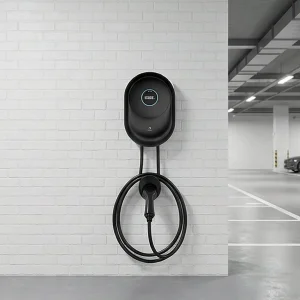
High-Efficiency Island-Optimized Charging Units
Initial commercial line engineered for standard grid integration and coastal deployment across South Tarawa and Kiritimati

The Geopolitical and Ecological Imperative of Electric Mobility in Kiribati
The Republic of Kiribati stands at the direct frontier of global climate change. Comprising 32 atolls and one raised coral island dispersed across 3.5 million square kilometers of the Pacific Ocean, Kiribati faces dual pressures: extreme vulnerability to sea-level rise and a deep economic reliance on imported fossil fuels. For SIDS (Small Island Developing States), the electrification of transport is not merely an environmental goal; it is a critical strategy for macroeconomic sovereignty and energy security.
Integrating Electric Vehicle Supply Equipment (EVSE) into the Kiribati power grid—primarily operated by the Public Utilities Board (PUB)—demands structural shifts. Traditionally, electricity in South Tarawa and outer islands has been generated via diesel generators, presenting high costs and emissions. However, under the Kiribati Integrated Energy Roadmap (KIER), the country is scaling solar photovoltaic (PV) generation and battery energy storage systems (BESS). Transitioning to EVs requires a smart, communicative charging infrastructure to prevent grid instability and maximize renewable energy utilization.
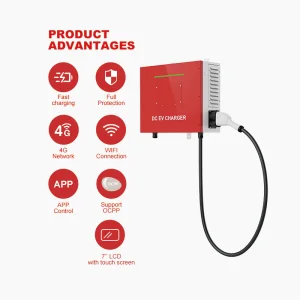
Our Open Charge Point Protocol (OCPP) compliant chargers act as the vital bridge between renewable generation and electric mobility. By adhering strictly to standard open protocols, our hardware allows PUB and local private operators to deploy load-shedding strategies, prevent peak demand spikes, and utilize surplus solar generation during peak sunlight hours to charge fleet and personal vehicles.
Technical Deep-Dive: OCPP Protocol Execution for Island Microgrids
In isolated power grids, uncoordinated charging behavior can lead to frequency fluctuations, voltage drops, and ultimately local grid collapse. VoltNode's OCPP 1.6-JSON and OCPP 2.0.1 compliant hardware addresses these microgrid vulnerabilities through hardware-software handshake mechanisms.
Dynamic Load Management (DLM)
Real-time balancing algorithms adjust charger current draw based on the instantaneous capacity of local solar-diesel hybrids, preventing generator overloads.
TLS 1.3 Cybersecurity
Ensures secure data transmission over public 4G/WiFi connections to central management platforms, preventing unauthorized grid commands.
Bidirectional V2G & V2H Protocols
Enables vehicle batteries to inject power back into home grids during cloudy periods or high tariff intervals, boosting island resilience.
Dynamic Grid Profiles and Load Balancing
Through OCPP Smart Charging profiles (specifically TxProfile and ChargePointMaxProfile), local energy authorities can send signal commands to VoltNode EVSEs. During cloud cover, which causes a sudden drop in solar generation on Tarawa's grid, the central backend can automatically scale down the current of all active charging sessions from 32A to 6A per phase within milliseconds. This rapid response mitigates the need for diesel generator ramp-up, reducing fuel consumption and protecting electrical components.
Additionally, our implementation of OCPP 2.0.1 allows for enhanced device management, enabling operators to remotely diagnose configuration errors, update firmware over-the-air (OTA), and monitor the real-time health of internal contactors, residual current devices (RCDs), and power modules without sending service crews to remote atolls.
Environmental Engineering: Surviving Kiribati's High-Salinity Marine Environment
Deploying high-voltage electronics in equatorial maritime climates is one of the most demanding engineering challenges. Kiribati experiences persistent high humidity (often exceeding 80%), extreme salt-spray deposition, and intense solar UV radiation. Standard charging stations designed for continental temperate zones deteriorate quickly under these conditions due to galvanic corrosion and thermal overheating.
Marine-Grade Structural Engineering
- Enclosures constructed with high-grade galvanized steel or UV-stabilized polycarbonate structural foam.
- C5-M Marine-grade anti-corrosion coating applied to all structural metal joints and fasteners.
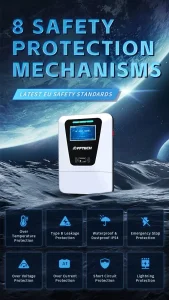
- IP54 (dust-protected and splashproof) and IP65 ratings for complete ingress protection.
- Conformal coating (double layer) applied to all internal PCBs, control units, and sensor arrays.
Thermal & Electrical Safeguards
- Dual-fan active ventilation designed with tortuous path airflow paths to exclude driving moisture.
- Integrated Type 2 surge protection devices (SPD) to protect against grid lightning strikes.
- Comprehensive protection circuit: Over/Under Voltage, Over/Under Frequency, and Earth Leakage Protection.
- Operating temperature range rated from -30°C to +55°C, ensuring reliable operation under direct sun.
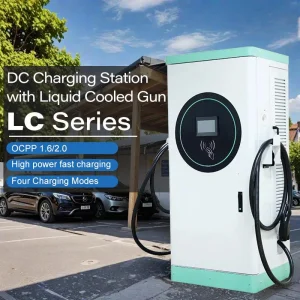
VoltNode's design philosophy prioritizes component isolating methods. Power conversion modules inside our DC Fast Chargers are sealed in air-tight compartments with liquid-cooled heat exchangers (where applicable) or dedicated internal airflow paths. This prevents humid, salt-laden ambient air from passing directly over live high-voltage semiconductor components, preventing dendrite growth and leakage currents that lead to hardware failures.
Global EV Charging Paradigms vs. Localized Microgrid Realities
Developing EV charging networks in urban landscapes like Europe or North America centers on high-density megawatt corridors, dynamic commercial pricing models, and ultra-high-power fast chargers. In contrast, the deployment in island regions like Kiribati prioritizes localized energy independence, microgrid integration, and cost-effective distribution.
The table below provides a comparative analysis of system requirements:
| Parameters | Global Mainland Charging Networks | Kiribati & Pacific Island Microgrids |
|---|---|---|
| Grid Source | Interconnected national/regional high-voltage grids | Isolated solar-diesel-battery hybrid systems |
| Charging Strategy | Market-driven, high-speed fast charging prioritized | Solar-aligned smart charging, load shedding |
| Environmental Risks | Standard weather variations (seasonal rain/snow) | High salt aerosol index, extreme humidity, tidal pooling |
| Network Telemetry | Fiber optic, robust 5G networks | Satellite backhaul, variable 3G/4G cellular networks |
| Maintenance Access | Rapid land-based dispatch teams & spare parts supply chain | Remote diagnostics, high-reliability components |
Recognizing these differences, VoltNode has adjusted the design parameters of our export systems. Every charger exported to the Kiribati market features offline caching for OCPP transaction records, auto-recovery on power losses, and local fallback authorization models (like offline RFID whitelist cache) to ensure charging operations continue even if network connection to the backend system is temporarily lost.
Ready to Transition Kiribati's Mobility Grid?
Connect with our technical engineers to design your OCPP-compliant charging array.
VoltNode Charger Co., Ltd.: Quality-Assured EVSE Manufacturing
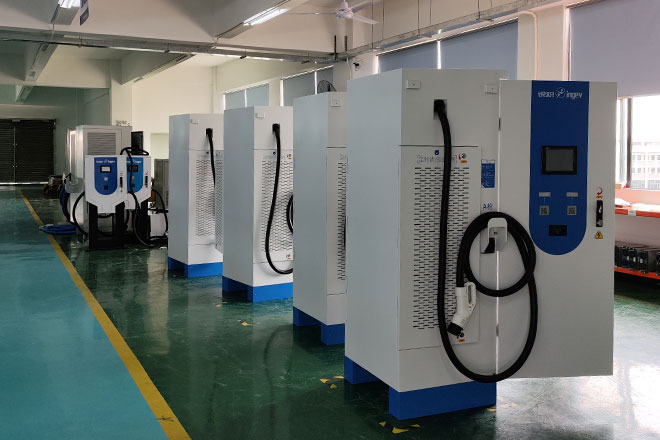
Dongguan VoltNode Charger Co., Ltd. is a high-tech enterprise specializing in electric vehicle (EV) charging equipment and related accessories. Operating a modern manufacturing facility covering over 10,000 m² in Dongguan, our operations are supported by a professional team of more than 350 employees. Our workforce includes experts in research and development, software engineering, power electronics, quality control, and international logistics.
Our factory integrates advanced testing equipment, including temperature and humidity testing chambers, salt fog corrosion testing stations, automated tester racks, and multi-gun simulator loads. We have established rigorous validation procedures for our export products to verify their long-term performance under demanding global conditions.
Our product lines comply with strict international safety standards, including CE and SGS compliance, with testing reports issued by accredited laboratories. We support comprehensive OEM/ODM configurations, allowing modifications to cable lengths, plug standards (Type 2, CCS2, GBT), branding, and custom microgrid firmware configurations.
Our Service Commitments
- Precise Manufacturing: Production built to customer technical specifications and microgrid connection guidelines.
- Custom Firmware Engineering: Pre-configuring custom OCPP server endpoints and local network IDs.
- Raw Material Sourcing: Incoming component inspection, utilizing trusted suppliers for magnetic switches, relays, and contactors.
- 100% End-of-Line Testing: Every charger undergoes automated load testing and insulation testing before dispatch.
- Technical Operations Support: Virtual integration support during commissioning and lifecycle support.
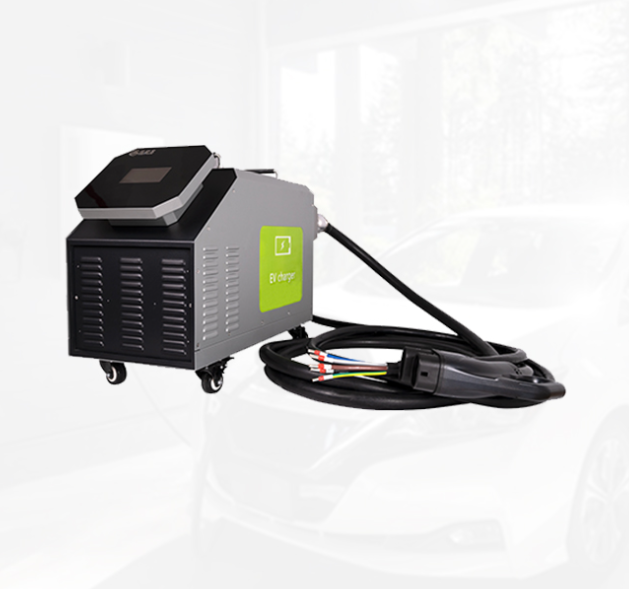
Technical Implementation Roadmap: Integrating EV Infrastructure in Kiribati
Building a reliable vehicle charging infrastructure requires a phased approach that matches the pace of microgrid upgrades and electric vehicle adoption. Below is the recommended implementation blueprint for private enterprises and municipal authorities in Kiribati:
Phase 1: Solar-Aligned Site Audits
Identify charging locations with nearby solar arrays (e.g., government buildings, commercial centers in Tarawa) to align charging loads with peak solar production.
Phase 2: Localized Dynamic Balancing
Configure AC and DC chargers with local dynamic balancing controllers to prevent overloading existing step-down transformers and distribution cables.
Phase 3: OCPP Management Integration
Link all physical points to a central microgrid controller via OCPP 1.6-JSON to allow real-time load shedding and central energy management.
VoltNode engineers work directly with local installers to advise on cable selection, surge protection coordination, and optimal grounding configurations for sandy atoll soils, ensuring installations maintain reliable safety grounding.
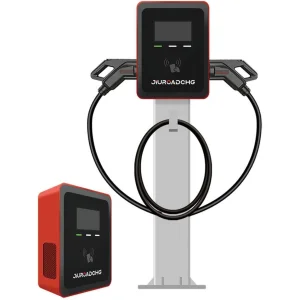
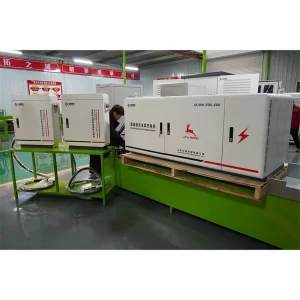
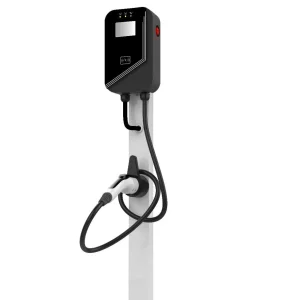
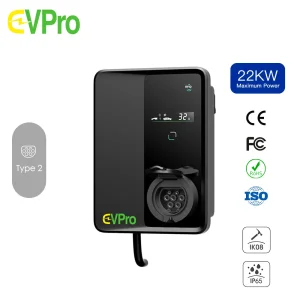
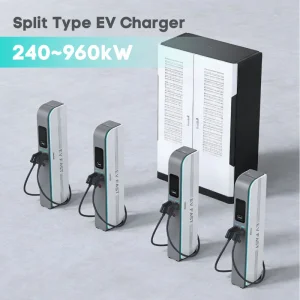
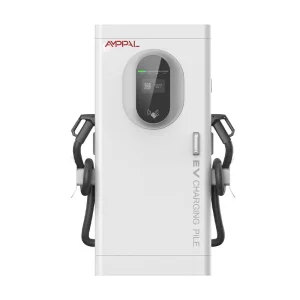
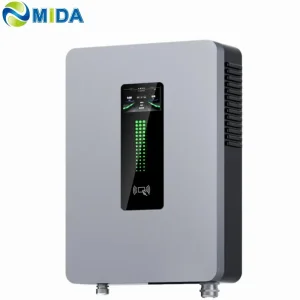
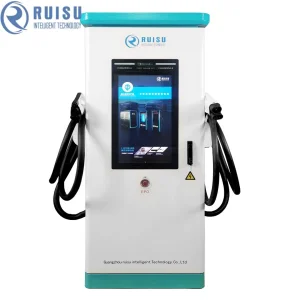
Professional AC & DC Commercial Product Suite
Scalable power ratings engineered for municipal, commercial, and utility fleet electrification in the Pacific
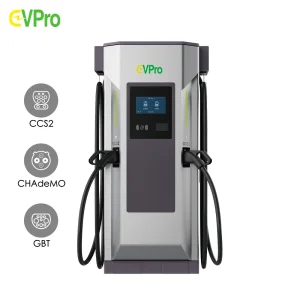
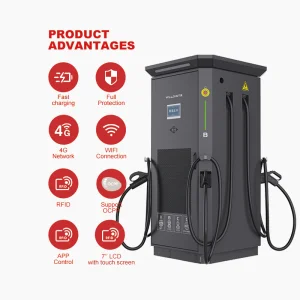
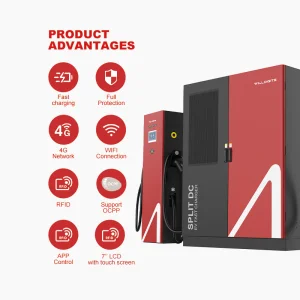
Additional Environmental-Certified Models Available for Dispatch:
Technical Specifications & Project FAQ
Addressing grid integration, marine durability, and OCPP programming queries for electrical engineers
How does OCPP 1.6-JSON dynamic load management protect the South Tarawa power grid?
In South Tarawa, the grid relies heavily on solar PV and diesel generators. When a high-draw EV load is initiated, our chargers utilize OCPP smart charging profiles to monitor overall system constraints. The central management backend calculates current availability and dynamically throttles charging current (e.g., limiting AC chargers to 10A or DC chargers to 20kW) to maintain voltage stability.
What physical design measures prevent salt air corrosion on VoltNode chargers?
We use heavy-gauge galvanization or outdoor-rated polycarbonate structural enclosures, combined with a C5-M marine-grade epoxy coating. Internally, all control circuits and power PCBs are double-coated with a specialized conformal silicone layer to isolate conductive runs from high humidity and airborne salt compounds.
Are the chargers certified for grid safety under Pacific utilities standards?
Yes. Our entire product catalog is CE certified, conforming to relevant standards including EN IEC 61851-1 (electric vehicle conductive charging systems) and EN IEC 61851-23 (DC charging stations). In addition, integrated Type 2 surge protectors help absorb grid voltage spikes, which are common on localized island grids.
How do the chargers handle cellular disconnection or dropouts in remote islands?
Our hardware features internal storage that caches offline transaction logs. If cellular connection drops, authorized users can start or stop sessions using RFID cards stored in the local cache. Once connection is re-established, the logged energy metrics are synchronized back to the central OCPP backend.
Can we customize billing structures or user interfaces on VoltNode chargers?
Yes. Because VoltNode hardware is fully OCPP compliant, you can pair it with any OCPP charge point management system (CPMS) to set custom tariffs, manage access control, run remote diagnostic cycles, or process local payments.
Consult with Our Engineering Team Today
Get in touch to receive direct assistance with engineering specifications, pricing quotes, compliance documents, and grid integration plans for Kiribati.
Send Inquiry Now