VoltNode Charger
Commercial Fleet Smart Charging Systems
Explore our high-performance AC and DC fast chargers engineered for heavy-duty commercial deployment and public transport infrastructure.
The Global Transition to Electric Ride-Sharing Fleets
The ride-sharing and passenger transport industry is undergoing an unprecedented shift toward electrification. Driven by regulatory mandates, corporate ESG commitments, and the compelling economics of lower Total Cost of Ownership (TCO), fleet operators worldwide are replacing internal combustion engine (ICE) vehicles with Electric Vehicles (EVs). However, scaling a fleet from ten EVs to thousands requires more than just cars; it demands a resilient, intelligent, and highly scalable charging infrastructure.
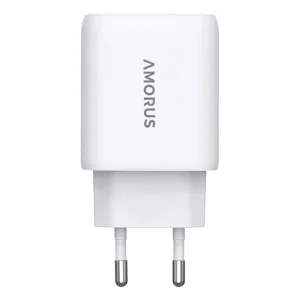
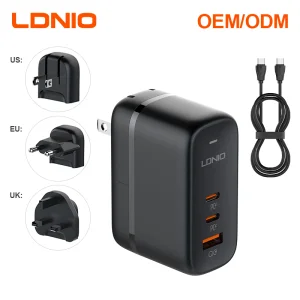
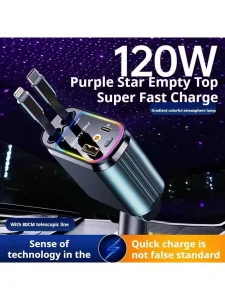
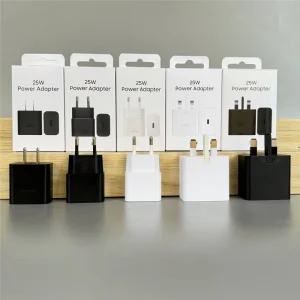
For ride-sharing fleets, uptime is the ultimate metric. Every minute a vehicle sits idle at a charger during peak hours translates to lost revenue. Dynamic ride-sharing operations require a complex mix of rapid charging infrastructure at strategic hubs and reliable AC overnight chargers at driver domiciles. This dual-requirement highlights the need for a versatile charging partner capable of manufacturing everything from robust high-power dual-gun DC stations to high-efficiency in-cabin power adapters.
Dongguan VoltNode Charger Co., Ltd.
A leading high-tech enterprise dedicated to engineering next-generation EV charging systems for international markets.
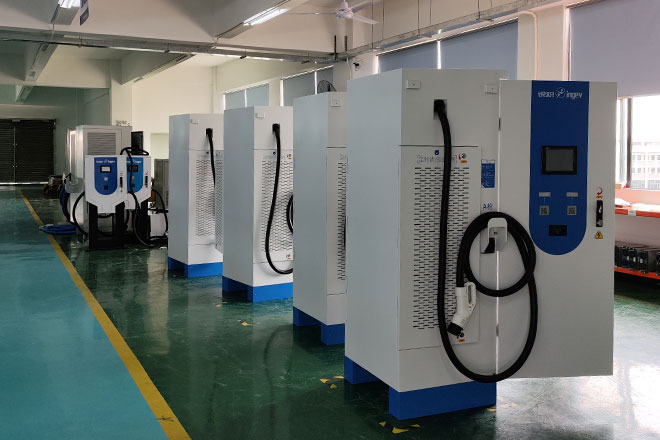
Dongguan VoltNode Charger Co., Ltd. stands at the forefront of the new energy revolution as a premier high-tech enterprise specializing in electric vehicle (EV) charging equipment and related accessories. Operating a modern, state-of-the-art manufacturing facility covering over 10,000 m² in Dongguan, China's elite electronic manufacturing capital, VoltNode is built on a foundation of engineering excellence, robust supply chain networks, and quality control.
Supported by a professional workforce of more than 350 dedicated employees, including a core R&D engineering division, VoltNode manages the entire life cycle of product delivery—from design concept and electrical prototyping to global certification compliance and long-term operating support. Our strategic location enables us to leverage vertical manufacturing supply chains, allowing us to maintain unparalleled quality while delivering cost-effective OEM/ODM services to fleet operators, utility companies, and global distribution channels.
Localized Applications: Fleet Charging Scenarios
How VoltNode customizes charging infrastructure topology to meet specific geographic and operational requirements.
Urban Megacity Charging Hubs
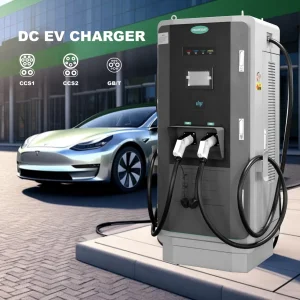
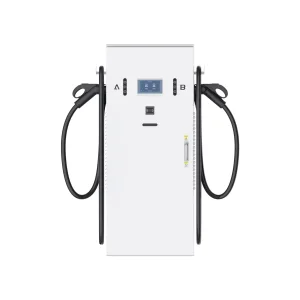
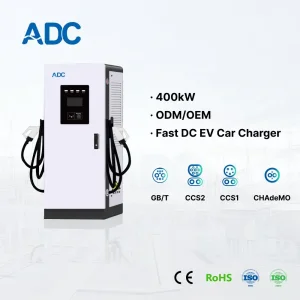
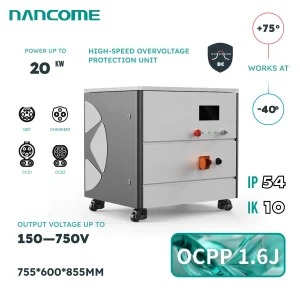
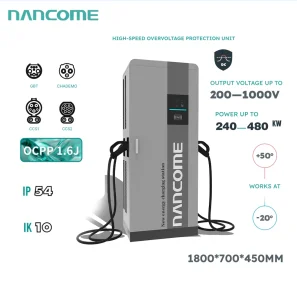
Designed for rapid-turnaround urban operations. Using our high-power DC systems (such as the 120kW & 240kW configurations), fleet drivers can recharge up to 80% capacity within 20-30 minutes during shift handovers. Incorporating dynamic load balancing, these hubs automatically distribute power among multiple vehicles based on battery state-of-charge (SoC).
Microgrid & Solar Integration
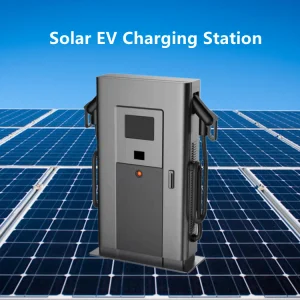
For regions with grid capacity limitations or high clean-energy goals, our Solar MPPT EV Fast Chargers enable fleets to utilize solar canopies and integrated battery energy storage systems (BESS). This minimizes peak demand fees, optimizes local energy consumption, and provides uninterrupted emergency backup charging during local power grid failure events.
Driver Domicile & Overnight Charging
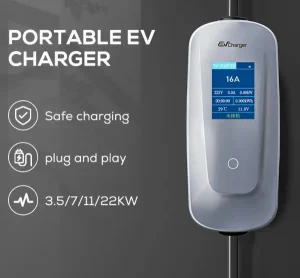
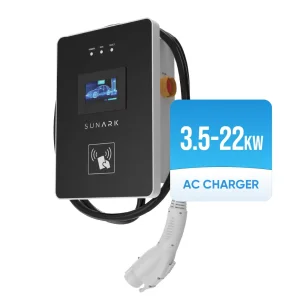
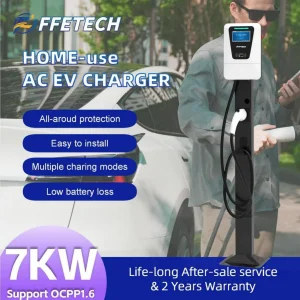
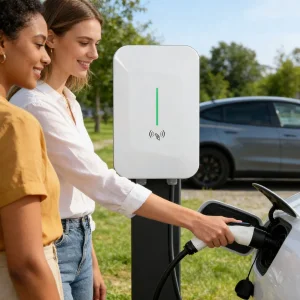
Many ride-sharing models rely on contract drivers taking their fleet vehicles home. Our 11kW AC chargers equipped with RFID/APP billing control systems ensure safe, slow, grid-optimized overnight charging. Smart scheduling allows drivers to charge automatically during off-peak tariff windows, lowering cost-per-mile metrics significantly.
The Dongguan Supply Chain Edge
Operating out of Dongguan gives VoltNode a distinct manufacturing advantage. Known as the world's electronics capital, Dongguan provides direct, local access to the most dense ecosystem of electronics components, cooling systems, cables, microchips, and power modules. This raw material proximity reduces lead times, cuts logistical overheads, and offers resilience against global geopolitical or shipping bottlenecks.
VoltNode capitalizes on this unique environment by maintaining deep vertical control over production. We perform strict component sourcing, incoming quality control (IQC), PCB assembly, final product line integration, and high-load heat chamber tests under one roof. Our close collaboration with local component providers enables fast development of custom configurations—delivering optimized solutions in half the time of Western competitors.
Technology Roadmap & Future Outlook
Our commitment to continuous innovation ensures VoltNode hardware is ready for tomorrow's energy grid.
GaN and Silicon Carbide Power Modules
By shifting module architectures to Gallium Nitride (GaN) and Silicon Carbide (SiC) switches, we are pushing charger module efficiency beyond 96.5%. This reduces heat losses, allows for smaller, more compact footprints, and reduces thermal management system stress in long-duration DC fast charging applications.
Bi-Directional Charging & V2G
Our upcoming product lines support Vehicle-to-Grid (V2G) and Vehicle-to-Home (V2H) configurations. For ride-sharing fleets, this means parked vehicles can serve as decentralized energy assets, discharging power back into local distribution grids during peak price spikes to yield additional revenue stream potential.
OCPP 2.0.1 & ISO 15118 (Plug & Charge)
Integration of advanced software interfaces allowing absolute interoperability. The deployment of ISO 15118 protocol enables drivers to initiate a session by simply plugging the connector into the vehicle—without apps, card swipes, or payment delays, maximizing operational convenience.
Rigorous Quality Assurance & Dedicated OEM/ODM Services
Providing custom engineering with strict quality control from raw material to shipping.
VoltNode's production ecosystem is built around safety, longevity, and high-performance. We understand that charging stations operating outdoors face severe environmental stress, from intense UV exposure to moisture penetration and thermal fluctuations. Our team implements extensive testing protocols at every phase of the manufacturing process.
Our Custom Engineering Services
- Tailored Specifications: Precise manufacturing based on custom engineering drawings and technical parameter files.
- Application Adaptation: Tailored casing designs, connector choices, and electrical topology setups for regional markets.
- Branding Options: Professional OEM/ODM solutions, color branding, custom user interfaces, and custom app integration.
- End-to-End Support: Technical guidance from structural planning to commissioning and field staff operation training.
Testing and Quality Framework
- IQC (Incoming Quality Control): Rigorous evaluation of all components and power module parts before assembly.
- Environmental Stress Testing: Testing units inside thermal chambers to ensure stable outputs under extreme heat or sub-zero conditions.
- Full-Load Performance Validation: 100% inspection of high-power DC systems prior to final packaging and global dispatch.
- Global Standard Certifications: Compliance verification with international regulatory frameworks including CE, SGS, and RoHS.
Frequently Asked Questions
Detailed answers to help fleet managers evaluate and deploy commercial EV charging networks.
Q1: What are the main electrical differences between single-gun and dual-gun DC chargers for fleets?
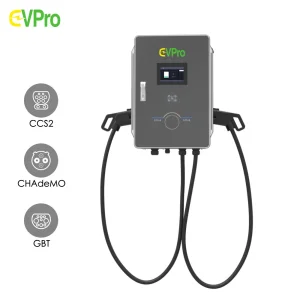
Dual-gun stations (like our Double Gun 120kW or 240kW stations) incorporate dynamic power routing. When a single vehicle is charging, it draws the full output of the system. When a second vehicle connects, the onboard power modules dynamically partition the current based on real-time battery requirements (SoC). This increases station utility rates, reduces queue times, and optimizes space utilization at urban hubs.
Q2: How do Solar MPPT Chargers benefit remote or off-grid logistics depots?
Solar chargers with integrated MPPT (Maximum Power Point Tracking) and battery storage allow chargers to function independent of local grid upgrades. During the day, the system stores solar power in an integrated battery bank. When a fleet vehicle docks, the energy is discharged at rapid rates. This is ideal for remote distribution hubs or locations where the cost of local grid capacity reinforcement is prohibitive.
Q3: How does VoltNode guarantee charger uptime and unit reliability?
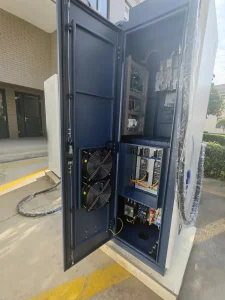
Uptime is maintained through modular subcomponent design and predictive health tracking. If an individual power module in a 240kW charger malfunctions, the station isolates the faulty module and continues running at a slightly reduced power output. It also triggers an automatic maintenance notification. Our OCPP software compatibility supports remote diagnosis, software patch updates, and configuration adjustments over-the-air, keeping system down-times to a minimum.
Q4: What certifications do your charging products carry?
Our products meet international compliance regulations and carry certifications including CE, SGS, and national EV charging inspection lab reports. We routinely conduct safety and performance audits to ensure our high-power setups meet environmental and safety guidelines in our global target markets.
Commercial, Residential & Accessories Catalog
Explore our wider range of vehicle accessories, home charging installations, and multi-power DC charging hardware.