 VoltNode Charger
Premium Integrated Charging Solutions
Engineered for compliance, safety, and rapid deployment.
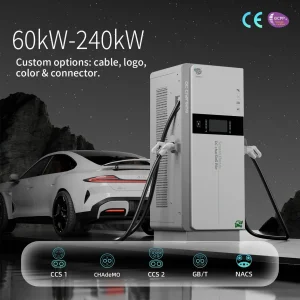
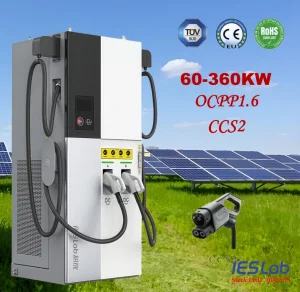
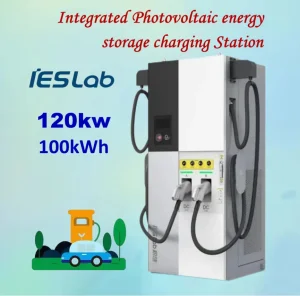
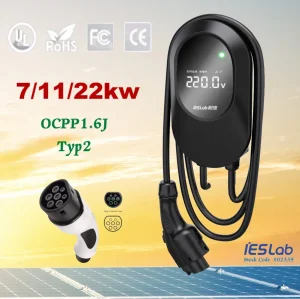
The Evolution of EV Safety: Why Type B RCD Integration is Non-Negotiable
In the rapidly evolving landscape of Electric Vehicle Supply Equipment (EVSE), the transition from traditional residual current devices (RCDs) to Type B RCD Integrated Chargers represents a fundamental shift in safety philosophy. As modern EVs utilize high-frequency switching and large DC battery systems, the risk of smooth DC leakage currents increases. Traditional Type A RCDs are "blinded" by DC leakage exceeding 6mA, potentially failing to trip during a lethal AC fault.
Integrating a Type B RCD (which detects AC, pulsating DC, and smooth DC leakage) directly into the charger’s PCB or internal circuit not only ensures compliance with IEC 62955 and IEC 61008 but also significantly reduces installation costs and space requirements for global operators.
Semantic Safety Standards
Meeting the rigorous demands of IEC 62752 for portable chargers and IEC 61851-1 for fixed stations. Integrated Type B RCDs offer a "Set and Forget" safety profile for end-users.
Smart Integration Tech
By utilizing digital sensors rather than bulky electromagnetic coils, integrated solutions offer real-time monitoring and auto-reset capabilities via OCPP 1.6J/2.0.1.
Reduced BOM Costs
Procuring chargers with integrated Type B protection eliminates the need for expensive external Type B RCCBs, saving up to $150 per installation point.
Dongguan VoltNode Charger Co., Ltd.
A High-Tech Hub for Intelligent Energy Solutions
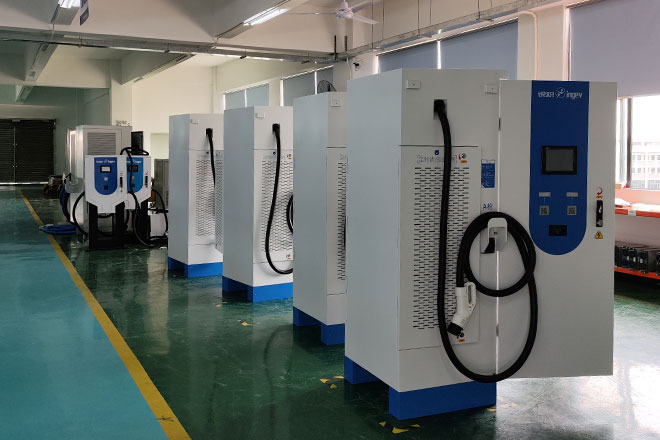
Dongguan VoltNode Charger Co., Ltd. is a high-tech enterprise specializing in electric vehicle (EV) charging equipment and related accessories. We are committed to providing comprehensive, intelligent charging solutions and operational services for new energy vehicles, delivering a convenient, efficient, and reliable charging experience for EV users worldwide.
VoltNode operates a modern manufacturing facility covering over 10,000 m² in Dongguan, supported by a professional team of more than 350 employees. Our workforce includes experienced experts in research and development, engineering, production, quality control, sales, installation, and after-sales service.
Chinese Factory Supply Chain Advantages
Why Dongguan is the Epicenter of EVSE Excellence
Cost Efficiency & Scale
Leveraging China's mature electronics ecosystem, factories like VoltNode offer a 30-40% cost advantage compared to European counterparts while maintaining identical safety standards.
Rapid R&D Iteration
The "Speed of Shenzhen/Dongguan" allows for new Type B RCD designs to move from prototype to mass production in as little as 12 weeks, responding faster to market shifts.
Vertical Integration
From SMT (Surface Mount Technology) for the Type B sensor PCBs to the heavy assembly of 360kW DC piles, every step is controlled in-house for maximum reliability.
Our strong supply chain and procurement team enable us to meet diverse customer needs across related product categories, including smart charging systems, energy storage solutions, solar integration systems, inverters, and various automotive electronic accessories. We have built a fully integrated production and service system that combines R&D, manufacturing, sales, installation, and operation management.
Local Support & Global Compliance
Bridging the Gap Between Chinese Manufacturing and International Markets
Regional Compliance Mapping
Global enterprises face a labyrinth of regulations. Type B RCD integrated chargers must be mapped to specific local requirements:
- Europe (EU): Strict adherence to EN 61851 and CE-LVD/EMC.
- North America (UL): Focus on UL 2231-1/-2 for CCID20 protection.
- UK: Compliance with BS 7671 (18th Edition) and PEN fault protection requirements.
Localization Strategies
VoltNode provides localized firmware supporting multi-language interfaces, local payment gateway integrations (Nayax, Stripe), and cloud-based management systems that comply with GDPR data sovereignty rules.
Future Trends in Integrated Charging
V2G & Bi-Directional
The next generation of Type B RCDs must handle bi-directional energy flows as Vehicle-to-Grid (V2G) technology becomes standard for grid stabilization.
AI-Driven Diagnostics
Utilizing "Signature Analysis" to predict leakage faults before they occur, allowing for proactive maintenance of commercial charging networks.
Ultra-Compact Form Factors
Advancements in SiC (Silicon Carbide) power modules are allowing for smaller chargers where integrated Type B protection is critical for miniaturization.
Localized Application Scenarios
Fleet Hubs
Maximizing uptime for electric buses and delivery vans with dual-port 30kW-60kW DC chargers featuring high-sensitivity RCD protection.
Smart Workplaces
Integration with office energy management systems, allowing for load balancing across 22kW AC units while maintaining individual safety isolation.
Residential Micro-Grids
Combining Solar PV, Battery Storage, and EV charging into a single ecosystem with unified residual current monitoring.
Technical Q&A: Expert Insights
Why is a Type B RCD specifically required for EV charging?
Standard Type A RCDs are designed to detect AC and pulsating DC. However, the DC-to-DC converters inside an EV can produce a smooth DC leakage. If this exceeds 6mA, it can saturate the core of a Type A RCD, making it unable to detect other dangerous AC faults. A Type B RCD detects this smooth DC, ensuring the safety device remains functional.
What is the benefit of "Integrated" vs "External" RCD?
Integration reduces the complexity of the electrical panel installation. An integrated Type B RCD is calibrated specifically for the charger's hardware, reducing nuisance tripping and allowing the charger to "self-test" its safety systems before every charging session.
Can VoltNode provide OEM/ODM for specific branding?
Yes. We support full OEM/ODM services, including customized enclosure designs, branded software interfaces, and specific technical modifications to meet local grid requirements or specialized industrial standards.
How do you ensure quality for global exports?
Our facility is equipped with advanced production lines and automated testing equipment. We conduct raw material inspection, 100% testing during production, and a final inspection before shipment. All products comply with CE, SGS, and national EV charging inspection standards.
Explore Our Full Range of Hardware
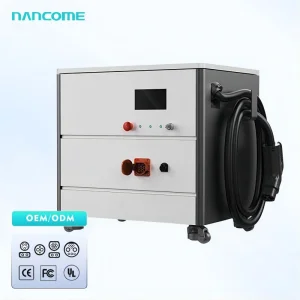
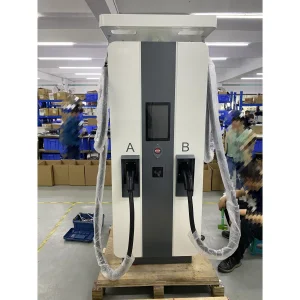
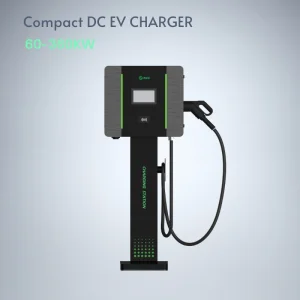
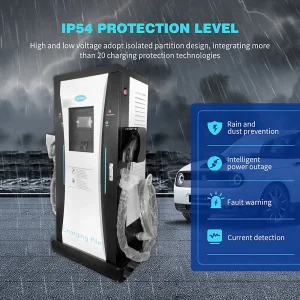
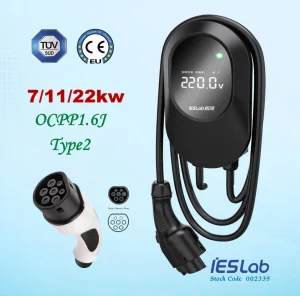
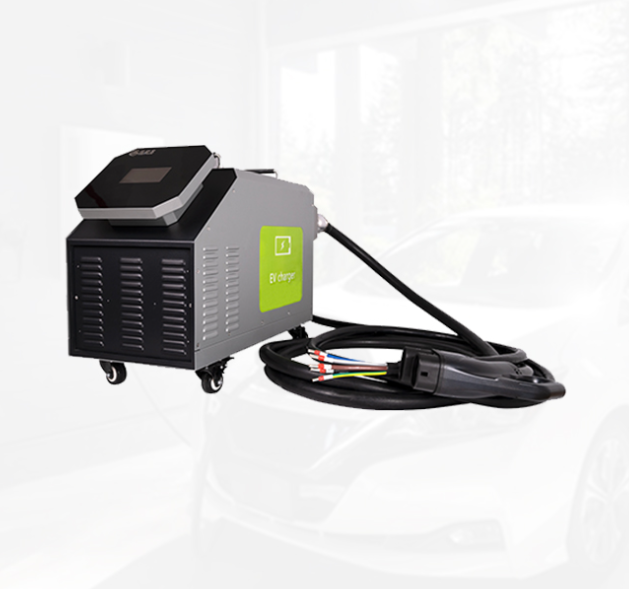
We warmly welcome you to explore our capabilities and collaborate with us in shaping the future of electric mobility.