VoltNode Charger
Featured Airport EV Charging Terminals & Hardware
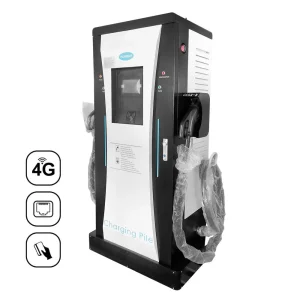


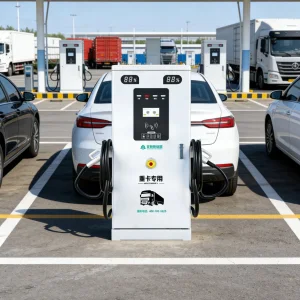
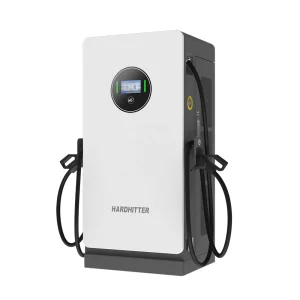
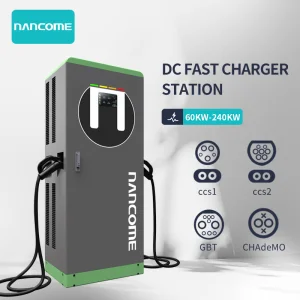
1. The Evolving Macro Landscape of Airport EV Charging
Commercial airports are highly complex ecosystems with unique demands on infrastructure. As aviation hubs transition to net-zero strategies, electrification is no longer limited to passenger transport. It now encompasses ground support equipment (GSE), logistics fleets, rental car facilities, airport shuttles, and long-term public parking structures. Managing this multifaceted demand requires highly advanced EV charging solutions that operate with maximum efficiency under tight time constraints.
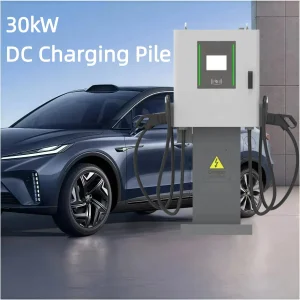
Integrating high-power charging architectures into existing airport microgrids presents distinct technical hurdles. Grid capability limits, high peak-demand charges, and severe spatial constraints mean airports cannot rely on standard charging equipment. Instead, they require specialized Industrial DC Fast Chargers (120kW to 240kW+) equipped with dynamic power distribution and intelligent load management. These systems prevent localized grid failures while ensuring rapid turnaround times for taxi lanes and rental fleets.
By deploying smart-charging software based on the Open Charge Point Protocol (OCPP 1.6J/2.0.1) and integrating localized battery energy storage systems (BESS), modern airports can successfully flatten load profiles and significantly lower operational expenses. The goal is to build an intelligent, resilient charging hub capable of scaling alongside the rapid adoption of electric mobility.
Fleet Decarbonization
Empowering airport shuttle buses, rental vehicles, and ground support equipment (GSE) with fast DC solutions to minimize operational downtime.
Microgrid Optimization
Dynamic load balancing and peak-shaving technologies that integrate with local solar power and battery energy storage.
Cyber & Grid Security
Securing transaction and grid communication data via TLS-encrypted OCPP 2.0.1, complying with aviation-level security standards.
2. Industry Spotlight: Dongguan VoltNode Charger Co., Ltd.
Dongguan VoltNode Charger Co., Ltd. is a premier, high-tech enterprise specializing in electric vehicle (EV) charging equipment and related smart power accessories. The company is committed to providing comprehensive, intelligent charging solutions and operational services for new energy vehicles, delivering a convenient, efficient, and reliable charging experience for EV users worldwide.
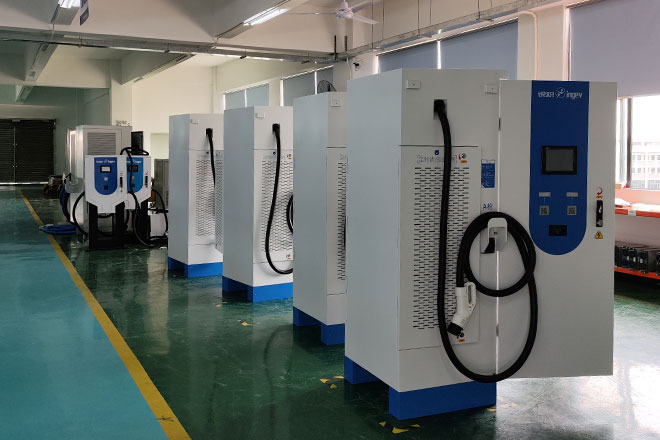
VoltNode operates a modern manufacturing facility covering over 10,000 m² in Dongguan, China—the global capital of electronic supply chains. Supported by a professional team of more than 350 employees, their workforce includes highly experienced experts in R&D, engineering, manufacturing, quality control, installation, and global after-sales support.
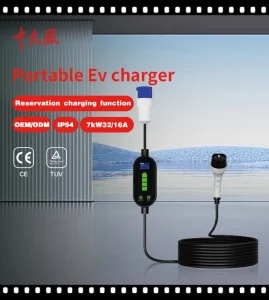
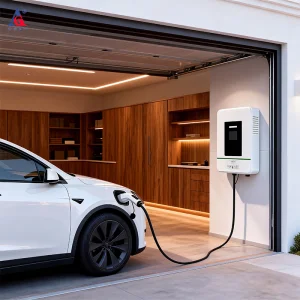
As a forward-looking enterprise, VoltNode actively contributes to the global transition toward sustainable energy and green mobility. Its product portfolio is engineered to meet the growing demand for EV infrastructure across public, commercial, and residential spaces, with specialized configurations tailored for airport hubs. VoltNode provides a full range of AC and DC chargers, including portable chargers, wall-mounted units, floor-standing stations, and mobile fast-charging systems.
A Comprehensive Ecosystem Approach
Beyond standard charging units, VoltNode leverages its integrated supply chain and procurement teams to support clients with smart charging management systems, energy storage integration, solar solar-powered off-grid stations, and various automotive accessories. Their manufacturing infrastructure is designed to handle custom OEM/ODM specifications with precision.
Precision Engineering
Manufacturing according to customer engineering drawings and technical requirements.
Customized Design
Engineering support to adapt hardware for harsh climates and grid conditions.
Strict Quality Assurance
Dedicated QC teams inspecting raw materials and finished products.
Global Compliance
Certifications including CE, SGS, and national EV charging inspection reports.
3. Technical Roadmap & Future Outlook (2025-2030)
The future of airport EV charging relies on scaling power output and simplifying user authentication. Key industry transitions include:
Megawatt Charging System (MCS) for Heavy Ground Support Equipment
Standard CCS and GBT ports are insufficient for large cargo-handling vehicles and high-capacity pushback tugs. The Megawatt Charging System (MCS) standard allows currents up to 3,000A at 1,250V, enabling refueling of large industrial airport equipment in under 20 minutes. Leading factories are designing modular power cabinets to support both standard passenger DC connections and high-power MCS plugs from the same power source.
ISO 15118 Compliance & Plug-and-Charge Functionality
In high-volume airport parking, friction-free transactions are essential. Implementing ISO 15118 allows automatic authentication and billing as soon as the cable connects, eliminating the need for RFID cards or mobile apps. It also enables encrypted Vehicle-to-Grid (V2G) communication, allowing parked vehicles to support the grid during periods of high demand.
Liquid-Cooled Cable Technology
To safely deliver charge rates above 150kW, cables must handle significant thermal stress. Liquid cooling reduces cable weight and diameter, making high-capacity chargers easier for users to handle while protecting the terminal from overheating.
4. Localization Support, Certifications, and Global Compliance
Deploying EV chargers in international airports requires navigating complex regulatory standards. Sourcing from experienced manufacturers who understand these local requirements is critical to ensuring long-term reliability and compliance.
European Market (CE & MID)
Requires CE certification, EN 61851 safety standards, and MID (Measuring Instruments Directive) compliance for accurate, legally compliant utility billing.
North American Market (UL/cUL)
Demands strict UL 2202 and UL 2594 listings. Products must also comply with FCC Part 15 class B emissions regulations and meet ADA accessibility standards.
Asia-Pacific Markets
Varies by country, spanning GB/T standards in China to specific regional compliance codes in Japan, South Korea, and Southeast Asian countries.
Leading manufacturers resolve these regulatory challenges by establishing global partnerships. By collaborating with local engineering firms, they provide on-site commissioning, regional warranty coverage, and quick-turn spare parts delivery. This ensures airport infrastructure projects meet local grid codes and remain operational over years of continuous service.
5. Chinese Factory 4.0: Supply Chain Resilience & Cost Optimization
China is the world's largest producer of EV charging equipment, driven by a highly integrated supply chain. Factories like VoltNode, based in the Pearl River Delta, leverage localized access to key components, including power modules, controllers, cables, and enclosures. This cluster effect significantly reduces material transport costs and shortens engineering lead times.
By adopting advanced production lines and automated testing systems, Chinese manufacturers can scale production rapidly while maintaining strict quality control. This allows them to offer competitive pricing on major components without compromising safety or reliability.
Additionally, this manufacturing ecosystem supports highly flexible OEM/ODM options. Airports and commercial operators can customize chargers with custom branding, specific payment integrations, and customized enclosures designed for harsh outdoor environments.
6. Sourcing Criteria for Global Procurement Managers
When sourcing EV charging equipment for major transportation projects, procurement teams should evaluate suppliers on several key factors:
- Hardware Adaptability: Confirm the supplier offers modular power units that are easy to upgrade as charging demands grow.
- Dynamic Load Sharing: Verify the software dynamically balances power between multiple outputs to prevent grid overload.
- Firmware & OCPP Security: Ensure chargers support secure, remote firmware updates to address emerging cybersecurity standards.
- Environmental Protection: Look for IP55/NEMA 3R or higher ratings to ensure long-term durability in wet, hot, or dusty conditions.
- Logistics & Support: Choose partners with established shipping relationships and clear, responsive after-sales support protocols.
7. Frequently Asked Questions (FAQ)
Q1: How do airport grid capacities impact the choice of EV charging hardware?
Airports often have limited spare capacity on their electrical grids. Installing multiple 120kW+ fast chargers requires hardware that supports dynamic load management and peak-shaving. Many facilities integrate chargers with on-site energy storage (BESS) or local solar systems to avoid costly utility upgrades.
Q2: What is the benefit of using OCPP-compliant charging stations in commercial parking?
OCPP (Open Charge Point Protocol) allows airports to connect chargers to any central management software. This enables operators to change software vendors, manage pricing, monitor energy usage, and coordinate charging schedules without needing to replace physical hardware.
Q3: Can Chinese EV chargers be customized for local markets like the US or EU?
Yes, leading manufacturers provide OEM/ODM services to adapt their platforms to local requirements. This includes installing Type 1, Type 2, GBT, or CCS connectors, modifying physical dimensions, adding regional payment gateways, and ensuring compliance with local certifications.
Q4: How do extreme weather conditions affect outdoor charging installations?
Outdoor chargers must be built to withstand rain, snow, dust, and high temperatures. Sourcing units with high IP ratings (such as IP55 or IP65) and integrated heating and cooling systems ensures reliable operation in harsh outdoor conditions.
Q5: What certifications are required for airport EV charging equipment?
Depending on the location, chargers must meet key international standards: CE and MID for Europe, UL and FCC for North America, and GB/T for China. These certifications confirm the hardware complies with safety, performance, and billing accuracy regulations.
Q6: What is the typical lead time when sourcing chargers from China?
Standard orders typically ship within 4 to 6 weeks, depending on order size. Custom OEM/ODM orders requiring specialized engineering, custom branding, or specific localized certifications may take 8 to 12 weeks from design approval to delivery.
VoltNode Manufacturing Infrastructure
Equipped with advanced assembly lines and comprehensive quality testing systems, VoltNode ensures every charger meets strict performance and safety standards before export.