How to Use a Portable EV Charger Instead of a Wallbox?

Time:2026-10-21 Author:Aria
0%

Can a portable EV charger replace a wallbox for daily use? The answer depends on your driving distance, parking space, and household electrical supply. A portable charger can work well for drivers covering 30 to 50 miles daily. It connects to a suitable outlet and travels easily in the vehicle. That flexibility matters for renters, apartment residents, and families using more than one parking location.

Tom Moloughney, an EV charging educator and host of State of Charge, has said, “The right charging solution depends on your vehicle, your electrical service, and your daily routine.” His point is practical. A portable EV charger may restore several miles of range each hour. Overnight charging can therefore meet modest driving needs. However, a wallbox usually delivers higher power, better cable management, and more convenient everyday operation.

Check the outlet first. A warm plug, loose connection, or long extension cord can create serious safety concerns. Use equipment rated for your vehicle and electrical circuit. Do not treat a household socket as automatically suitable for continuous charging. That assumption is easy to make.

A wallbox is often the smoother choice for high-mileage drivers. Yet it is not always essential. Portable charging may replace one for daily use, but only when the charging speed matches your routine. Real life is less tidy. Weather, shared outlets, and forgotten charging sessions can change the calculation. This guide explains how to use a portable EV charger safely, efficiently, and with realistic expectations.
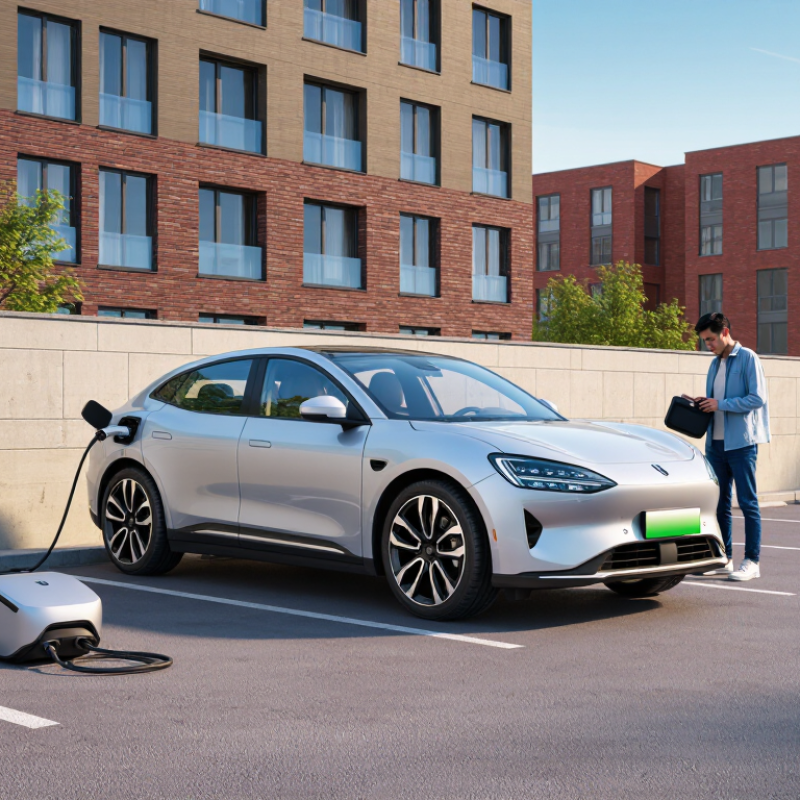
How to Use a Portable EV Charger Instead of a Wallbox?

What a Portable EV Charger Is and How It Differs From a Wallbox

A portable EV charger is usually a transportable charging cable with built-in safety controls. It connects the vehicle to a household socket or another suitable outlet. A wallbox is a fixed EV supply unit, normally installed on a dedicated circuit. It often delivers higher, steadier power.

The difference becomes obvious overnight. A household connection may provide roughly 1.4 to 3.7 kW, depending on local wiring and the charger. Many wallboxes deliver 7.4 kW, while three-phase systems can reach 11 or 22 kW. The International Energy Agency reported more than 14 million electric cars sold globally in 2023. That growth increases pressure on convenient home charging. Portable equipment offers flexibility, but it does not create extra electrical capacity.

Use the portable unit when travelling, renting, or keeping an emergency backup. Park beside a verified outlet, inspect the cable, and select the lowest safe current when wiring is uncertain. Keep the control box off wet ground. Do not use extension cords unless the manufacturer explicitly permits them. The U.S. Department of Energy notes that Level 2 charging can add substantially more range per hour than standard household charging. Still, real performance depends on the car, temperature, battery state, and circuit limits. Portable charging can feel liberating. It can also be slow. A wallbox costs more and requires professional installation, yet it usually provides better daily convenience, load management, and protection against overloaded circuits. Neither option is automatically superior. Your parking habits matter more than the label.

Portable EV Charger vs. Wallbox: Typical AC Charging Power

A portable charger can replace a wallbox when its power rating matches the vehicle, electrical circuit, and available socket. The values below are representative AC charging ratings; actual power depends on the car, cable, socket, and installation.

Typical examples: Level 1 portable charging uses about 1.4 kW, portable Level 2 charging commonly reaches about 7.2 kW, while permanently installed AC wallboxes are commonly rated at 11 or 22 kW.

How to Check Your EV, Power Supply, and Charging Requirements

A portable EV charger can replace a wallbox for occasional charging, but preparation matters. Check the vehicle’s manual and charging port before connecting anything. Confirm the connector type, maximum AC charging rate, and supported voltage. An EV may accept more power than a household socket can safely provide. Inspect for heat marks, cracked plastic, moisture, or loose pins. Small damage matters. Note the battery level and expected driving distance. If overnight charging is planned, estimate the required energy instead of charging blindly.

Examine the power supply at the exact parking location. Identify the outlet rating, circuit breaker, grounding, and available voltage. Residual-current protection should be present where required. A dedicated circuit is strongly preferred for repeated charging. Do not share it with heaters, washing machines, or other heavy loads. Use the lowest suitable current when capacity is uncertain. Never rely on a thin extension cable or a warm adapter. Have a qualified electrician verify old, outdoor, or ungrounded outlets. That check can prevent a bad assumption.

Match the charging session to real conditions. Set a current below the supply limit, leaving a safety margin. Keep the control unit off wet ground, protect connections from rain, and allow airflow around it. Monitor the first session for unusual warmth, smell, error messages, or interruptions. Stop immediately if anything seems abnormal. Portable charging is convenient, but convenience can hide limitations. Recheck the setup after moving, changing outlets, or adding appliances. That is where confidence needs questioning.

How to Choose the Right Portable Charger and Safety Accessories

A portable EV charger can replace a wallbox when you need flexibility, rental-friendly installation, or occasional charging. The International Energy Agency reported over 14 million electric cars sold worldwide in 2023. Charging demand is rising, but home electrical systems vary widely. Choose a charger with adjustable current, clear power ratings, and compatibility with your vehicle’s inlet. A 3.6 kW unit may suit overnight charging, while higher output requires stronger household wiring. Do not judge performance by cable thickness alone.

Tips: Check the socket, breaker rating, and grounding before purchase. A qualified electrician should inspect older homes. Avoid adapters that feel loose or warm.

Safety accessories matter more than many buyers expect. Select a cable with heat-resistant insulation, weather protection, and visible status indicators. A residual-current protection device can help detect leakage, while a temperature sensor can reduce overheating risks. Keep the connector away from puddles, snow, and vehicle tires. The U.S. Department of Energy notes that Level 1 charging commonly adds about 2–5 miles of range per hour, so daily distance should guide your choice. Faster charging is not always better for a weak circuit.

Tips: Carry a weatherproof storage case, a socket cover, and a small thermal label. Check plugs after ten minutes of charging. Warm is concerning. Hot is a stop signal. I would also test the charger at home before a long trip; product descriptions can sound reassuring, but real sockets sometimes disagree.

How to Use a Portable EV Charger Instead of a Wallbox? - How to Choose the Right Portable Charger and Safety Accessories

Category Selection Dimension Typical Data or Requirement Why It Matters Recommended Practice
Portable Charger Charging mode AC Mode 2 portable charger with an in-cable control and protection device Provides communication, residual-current protection and basic charging control without a permanently installed wallbox. Confirm that the charger complies with the electrical standards required in the country of use.
Supply voltage Common single-phase input: 220–240 V AC; some units also support 110–120 V AC The voltage determines compatibility with the outlet and affects available charging power. Match the charger to the local electrical supply and vehicle charging system.
Adjustable current Typical selectable settings: 6 A, 8 A, 10 A, 13 A, 16 A or 32 A, depending on the model and connector Lower current reduces the load on older or shared circuits; higher current shortens charging time when the circuit supports it. Start at the lowest practical setting and increase only after checking the circuit rating.
Maximum charging power Approximately 1.4–3.7 kW at 230 V and 6–16 A; approximately 7.4 kW at 230 V and 32 A on a suitable circuit Actual power is limited by the charger, outlet, circuit, vehicle and local regulations. Use the lowest value among the charger rating, outlet rating, circuit rating and vehicle acceptance rate.
Charging-time estimate Charging time ≈ energy required ÷ effective charging power; allow approximately 10–15% extra for charging losses A 60 kWh battery adding 20 kWh at an effective 3.3 kW may require roughly 6–7 hours. Portable charging is suitable for overnight or destination charging, but is slower than many dedicated high-power installations.
Electrical Compatibility Vehicle connector Select the connector type specified by the vehicle; common AC connector families include Type 1 and Type 2 A connector mismatch prevents charging or may require an approved adapter. Check the vehicle handbook and use only compatible, properly rated adapters.
Outlet type Use a grounded outlet rated for continuous EV charging; a dedicated circuit is preferred EV charging can draw high current for many hours, creating more heat than short-duration household loads. Have a qualified electrician inspect the outlet, wiring, protective devices and earthing before regular use.
Extension cable Avoid standard household extension cords; if unavoidable and permitted locally, use a short, fully unwound cable with adequate current and environmental ratings Undersized, coiled or damaged cables can overheat and cause voltage drop or fire. Prefer a correctly positioned outlet over an extension cable. Never use a multi-socket adapter.
Circuit capacity Continuous EV charging load should remain within the circuit and protective-device rating; local electrical rules may require load management Other appliances on the same circuit may cause nuisance trips or excessive heating. Do not share a high-current charging circuit with heaters, dryers or other heavy loads unless designed for it.
Safety Accessories and Protection Residual-current protection Use the protection specified for EV charging, such as an appropriate RCD/GFCI arrangement and DC leakage protection where required EV charging equipment can produce residual-current conditions that require suitable protection. Do not rely on a basic household protection device if local rules require EV-specific protection.
Outlet weather cover Use a weatherproof enclosure or cover rated for the installation environment Protects the fixed outlet from rain, dust and accidental contact. Keep the charger control box and connectors off wet ground; follow the product outdoor-use rating.
Cable support Use a wall hook, cable hanger or strain-relief support rated for the cable weight Reduces stress on the plug, socket and vehicle inlet. Keep the cable away from vehicle tires, sharp edges, standing water and pedestrian routes.
Temperature monitoring Prefer chargers with plug or control-box temperature monitoring and automatic current reduction or shutdown Detects abnormal heating at the outlet or connection point. Stop charging if the plug, outlet or cable becomes unusually hot, discolored or deformed.
Surge protection Consider whole-home surge protection or a charger with suitable transient protection where permitted May reduce damage from certain electrical surges, but does not replace correct earthing or overcurrent protection. Install protection through a qualified electrician and follow local requirements.
Daily Use Procedure Before plugging in Inspect the plug, pins, cable, control box, vehicle inlet and outlet for damage, moisture or contamination Damaged or wet equipment can create shock, overheating or arcing hazards. Do not charge until defects are repaired or the affected component is replaced.
Connection sequence Connect the portable charger according to its instructions, select a safe current, then start the vehicle charge session Correct sequencing helps the control system establish a safe connection before current flows. Never force a connector or bypass the control box.
During charging Monitor for excessive heat, burning odor, repeated circuit trips, error messages or water exposure These are warning signs of an overloaded circuit, poor contact or equipment fault. Stop charging safely and disconnect power before investigating a fault.
After charging Stop the session using the vehicle or charger controls before unplugging; store the cable dry and loosely coiled Reduces arcing risk and prevents long-term cable damage. Do not wrap the cable tightly around the control box or leave connectors exposed to weather.
Portable Charger vs. Wallbox Best use case Travel, temporary parking, rental properties, occasional charging or locations without a permanent installation Portable equipment offers flexibility and can be moved between suitable outlets. Choose a wallbox for frequent home charging, higher convenience or a permanently managed circuit.
Installation requirement Usually no dedicated wall-mounted charging unit, but the outlet and circuit still require proper inspection Portable does not mean risk-free or suitable for any household outlet. Use a qualified electrician whenever a new circuit, outlet or protective device is installed.
Convenience and control Typically provides basic current selection and protection; a permanent unit may offer easier cable management, scheduling, load management and access control Portable charging can meet daily needs but may involve manual setup and storage. Select based on charging frequency, electrical capacity, portability needs and local safety rules.

Note: Electrical ratings, connector requirements and protection rules vary by country, vehicle and installation. Always follow the vehicle and charger instructions and applicable local electrical regulations.

How to Connect and Start Charging Your Electric Vehicle

A portable EV charger can replace a wallbox when your daily driving needs are modest. The IEA’s Global EV Outlook 2024 reports more than four million public charging points worldwide at the end of 2023. Yet home charging remains more convenient when available. Before connecting, park on a dry, stable surface and inspect the cable, plug, and socket. Do not use a damaged outlet or a household extension cord.

Match the charger to your vehicle and local electrical supply. Confirm the connector type, voltage, current limit, and charging schedule in the vehicle manual. A standard household connection may add only a few miles of range per hour, while a dedicated higher-voltage circuit charges faster. The U.S. Department of Energy’s Alternative Fuels Data Center gives similar guidance, noting that charging speed depends on power, battery size, and vehicle limits.

Plug the charger into the outlet before connecting it to the vehicle, unless the instructions specify another order. Check that the indicator shows a normal connection, then start charging through the vehicle controls. Keep the control unit off wet ground. After charging, stop the session before removing the vehicle connector. Portable charging feels simple. It is not always forgiving. Older sockets can heat under continuous load, and a loose connection may trip protection. I still check the plug after several minutes, because a cool start does not guarantee safe operation for the entire session.

How to Monitor, Stop, and Store the Portable EV Charger

A portable EV charger can replace a wallbox when fixed installation is impractical. Its flexibility demands closer attention, especially during long charging sessions. Check the charger’s screen or indicator regularly for current, voltage, and fault alerts. A sudden power drop may signal an overheated plug, loose connection, or supply problem. Touch the plug carefully. It should feel warm, not painfully hot. Keep the control unit off wet ground and away from standing water.

Stop charging through the vehicle or charger controls, following the instructions for your model. Wait until the charging indicator turns off before disconnecting. Remove the connector from the vehicle gently, then unplug the power supply if the manual requires it. Never pull the cable itself. I still check the socket after stopping, because a dark mark or softened plastic needs immediate attention. That small inspection is easy to skip.

Storage affects reliability. Wipe the cable with a dry cloth, inspect it for cuts, and let it cool completely. Coil it loosely without sharp bends. Store the charger in a dry, shaded place, preferably inside a protective case. Avoid tight wrapping, heavy objects, and damp garages. Do not use unapproved extension cords or damaged sockets. A useful routine is simple: check, charge, stop, cool, and store. Yet routines can fail when people hurry. Set a reminder if charging overnight becomes common.

FAQS

What is a portable EV charger?

It is a transportable charging cable with built-in safety controls. It connects an electric vehicle to a suitable household outlet. Keep its control box away from wet ground.

How does a portable charger differ from a wallbox?

A portable charger moves between locations and usually uses existing outlets. A wallbox stays installed on a dedicated circuit. It often provides steadier, faster charging.

Can a portable charger replace a wallbox?

It can replace one for occasional charging, travel, rentals, or emergencies. It may not suit daily charging needs. Your parking routine matters more than the equipment label.

How fast can portable charging be?

Household charging may provide about 1.4 to 3.7 kilowatts. Overnight charging can work, but progress may feel slow. Temperature and battery condition also affect speed.

What should I check before using a portable charger?

Check the vehicle manual, connector type, voltage, and maximum charging rate. Inspect the outlet for cracks, moisture, heat marks, or loose pins. Small damage matters.

How can I check whether an outlet is suitable?

Identify its rating, circuit breaker, grounding, and available voltage. A dedicated circuit is strongly preferred for repeated charging. Older or outdoor outlets need professional inspection.

What current setting should I use?

Choose a current below the outlet’s safe limit. Leave a safety margin when wiring details are uncertain. Lower is sometimes wiser.

Should I use an extension cord or adapter?

Avoid extension cords unless the charger instructions specifically permit them. Do not use loose or warm adapters. A thin cable can overheat quietly.

What safety accessories are useful?

Consider residual-current protection, temperature monitoring, weatherproof storage, and a socket cover. Keep connectors away from puddles, snow, and tires. Simple protection helps.

What warning signs mean I should stop charging?

Stop for unusual heat, burning smells, error messages, or repeated interruptions. Warm is concerning. Hot means stop immediately. I would not trust a reassuring product description alone.

Conclusion

A portable EV charger can be a flexible alternative to a wallbox when you need charging at home, while traveling, or at different locations. Before using one, check your vehicle’s charging port, onboard charging limits, available outlet capacity, cable length, and preferred charging speed. Choose a charger with suitable power ratings, weather protection, temperature monitoring, and essential safety features such as ground-fault protection. Can a portable EV charger replace a wallbox for daily use? It can, provided your electrical supply is reliable and the charger matches your vehicle and regular driving needs, although charging may be slower and less convenient than with a dedicated wallbox.

To begin, connect the charger to a suitable power source first, then attach the vehicle connector and confirm that charging has started through the vehicle’s display or charger indicators. Monitor the session for unusual heat, warnings, or interruptions. When finished, stop charging through the vehicle or charger controls, disconnect carefully, and store the equipment in a clean, dry place without tightly bending the cable.

Aria

Aria

Aria is a dedicated marketing professional with a deep passion for innovative strategies and a keen understanding of our company's product offerings. With a wealth of experience in the industry, Aria excels at crafting engaging content that highlights the unique features and benefits of our......