China Top 10 7kW Chargers How Long to Fully Charge an EV?

Time:2026-11-08 Author:Oliver
0%

How long does a 7kW charger take to full charge an EV? The quick estimate is battery capacity divided by charging power. A 60kWh battery, for example, needs about 8.6 hours on paper. Real charging takes longer in many cases. Energy is lost during charging, and the car may not accept the charger’s full output. Near a full battery, charging can also slow down. A useful expert takeaway from EV charging analyst Tom Moloughney’s public guidance is that the vehicle’s onboard charger can limit the power it accepts. The charger’s label does not tell the whole story.

This guide compares ten 7kW chargers available in China and explains what their ratings mean in everyday use. A small hatchback plugged in overnight may be ready by morning. A larger-battery SUV may need more time, especially if it starts nearly empty. Check the vehicle’s AC charging limit, usable battery capacity, and the charger’s actual output before estimating a session. These details matter more than a neat number in a product listing. The estimate is helpful, but it is not exact. Weather, charging losses, and battery management can shift the result. We will distinguish practical expectations from ideal calculations, so readers can compare chargers without assuming every EV charges at the same speed.
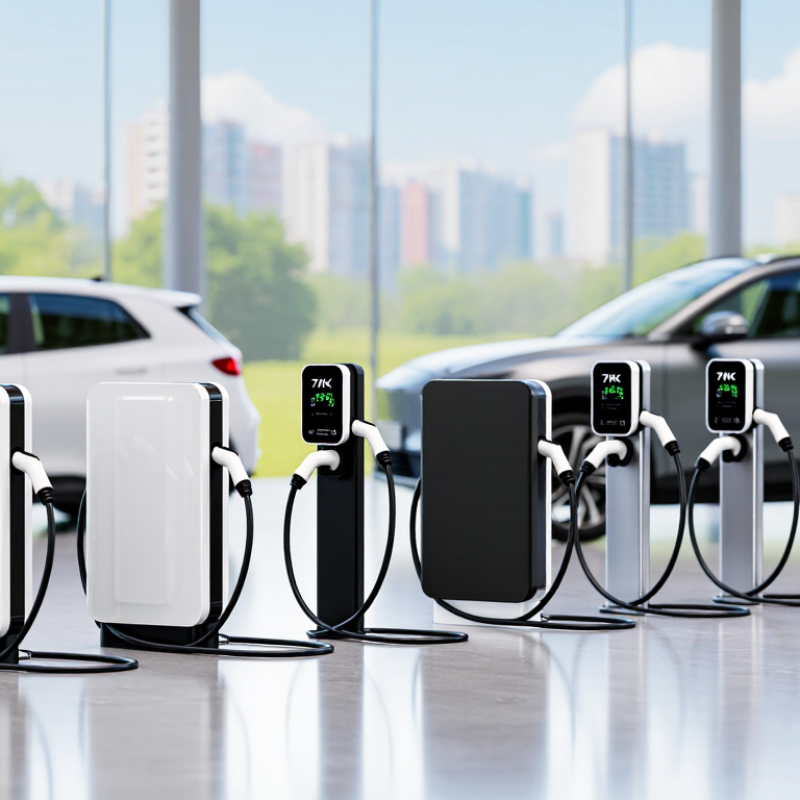
China Top 10 7kW Chargers How Long to Fully Charge an EV?

Understanding 7kW EV Charging in China

In China, a 7 kW AC charger is a common home-charging option, but its rating is not a guaranteed average. A 60 kWh battery would need about 8.6 hours from empty under ideal conditions. Allowing for charging losses, roughly 9–10 hours is a more practical estimate. Charging from 20% to 80% may take around 5.5–6.5 hours. Real life varies. The car’s onboard AC charger, battery temperature, and household supply can all affect the result. A vehicle limited to 6.6 kW, for example, cannot use the full output of a 7 kW unit.

The International Energy Agency’s Global EV Outlook 2024 reports that China had about 2.7 million public charging points at the end of 2023, around 70% of the global total. That scale shows how quickly charging access is expanding, though public station counts do not tell you whether a charger is available near home. For daily use, a 7 kW unit can often replenish a typical commute overnight. A larger 75 kWh battery may need around 11–12 hours for a full charge. One useful correction: rated power is a ceiling, not a promise. Cold weather, long cables, or a vehicle’s charging limit can quietly add time.

How a 7kW Charger Powers an Electric Vehicle

A 7 kW charger supplies electricity to an EV through an AC connection. The car’s onboard charger converts that power into the DC energy stored in its battery. So the charger’s rating is only part of the picture. If the vehicle accepts just 3.7 kW of AC power, it cannot use the full 7 kW.

At a steady 7 kW, a 60 kWh battery would take about 8.6 hours to fill from empty in a perfect calculation. Real charging takes longer. Conversion losses, battery temperature, and the car’s charging limits all affect the result. A more practical estimate might be around nine to ten hours, though the vehicle’s manual or charging display offers a better guide. Most drivers do not charge from empty, either.

Picture plugging in at home after an evening drive. The cable is connected, the car is parked, and several hours pass while it charges overnight. Convenient, but not instant. A 7 kW unit is generally suited to steady AC charging rather than rapid stops between long journeys. Household wiring and the installation itself also matter, so a qualified installer should check the setup. I would treat any single charging-time figure as a useful estimate, not a promise. Small differences add up.

How Long Does a 7 kW Charger Take to Fully Charge an EV?

Estimated charging times for a 0–100% charge, based on a 7 kW AC charger and an assumed 90% charging efficiency. Actual times vary with the vehicle’s onboard charger, battery temperature, and charging behavior; charging may slow near full capacity.

What Affects the Time Required for a Full Charge?

A 7 kW charger does not guarantee the same charging time for every EV. The car’s onboard charger can limit how much AC power it accepts. Battery temperature matters, too: a cold pack may charge more slowly. Near full, the vehicle may reduce power to protect the battery. It varies.

A useful estimate starts with the energy needed, not the battery’s full capacity. For example, charging a 60 kWh battery from 20% to 100% requires about 48 kWh. At a steady 7 kW, that is nearly seven hours; real charging usually takes longer because of conversion losses and power changes. The U.S. Department of Energy’s Alternative Fuels Data Center gives Level 2 charging as roughly 10–20 miles of range per hour. That range is a guide, not a promise: vehicle efficiency and charging equipment both affect it.

Tips: Check your vehicle’s maximum AC charging rate and the charger’s actual output. Start with the battery percentage you expect to have, and allow extra time in cold weather. One detail is easy to overlook: a 7 kW charger may deliver less than 7 kW at the car. That small gap adds up overnight.

Estimated Full-Charge Times by Battery Capacity

A 7 kW home charger does not add seven kilowatt-hours to every car battery each hour. The vehicle’s onboard charger, temperature, and charging losses affect the rate. The U.S. Department of Energy’s Alternative Fuels Data Center lists Level 2 equipment across a wide power range, from about 2.9 to 19.2 kW. So a charger’s label is only part of the estimate.

For a simple planning estimate, assume roughly 6.3 kW reaches the battery after losses. A 40 kWh battery would then take about 6–7 hours from empty; a 60 kWh pack, about 9–10 hours; and an 80 kWh pack, roughly 12–14 hours. These are calculations, not guaranteed charging times. The IEA’s Global EV Outlook 2024 describes a market with varied vehicle types and battery sizes, so these capacities are illustrative rather than universal.

Real life is messier. Charging may slow near full, and a car limited to 3.6 kW AC will take longer even when connected to a 7 kW unit. That is the catch. A cool garage, a warm battery, or other household electrical loads can also shift the clock. For a daily routine, charging from 20% to 80% usually takes much less time than a full-empty estimate.

Comparing China’s Top 10 7kW EV Chargers

A 7kW charger is a common home option in China, but comparing the top ten means looking beyond the number on the casing. Check continuous output, connector fit, cable length, weather protection, and load management. A steady charger beside a garage wall may be more useful than a feature-rich unit with awkward installation.

For a rough estimate, divide the energy needed by the charger’s real output. Adding 60kWh may take about nine to ten hours if the car accepts close to 7kW. Losses, battery temperature, and the vehicle’s onboard charger can extend that time. Charging slows near full, too. So “fully charged by morning” is plausible, but not guaranteed. The comparison gets messy here.

Tips: Compare usable output, not just rated power. Check whether your car supports 7kW AC charging, and leave extra time on cold nights. A short trial at home can reveal more than a polished specification sheet.

FAQS

How does a 7 kW charger power an electric vehicle?

It supplies AC electricity. The vehicle’s onboard charger converts it into DC energy stored in the battery.

How long might a 7 kW charger take to fill a 60 kWh battery?

A practical estimate is about nine to ten hours. Real charging can take longer. It is not a promise.

Does every electric vehicle receive 7 kW from the charger?

No. The vehicle’s onboard charger limits its AC charging rate. A car limited to 3.7 kW cannot use the full output.

How long does charging from 20% to 100% take for a 60 kWh battery?

It requires about 48 kWh. At a steady 7 kW, that is nearly seven hours, before losses and slower charging near full.

What charging times are typical for different battery sizes?

If about 6.3 kW reaches the battery, a 40 kWh pack may take six to seven hours. A 60 kWh pack may need nine to ten hours. An 80 kWh pack may take twelve to fourteen hours.

Why can charging take longer in cold weather?

A cold battery may accept power more slowly. Charging can also slow near full, while conversion losses reduce the energy reaching the battery.

Is a 7 kW charger suitable for overnight home charging?

Often, yes. Plug in after an evening drive and let the car charge for several hours. Steady, not instant.

What should drivers check before using a 7 kW charger?

Check the car’s maximum AC rate and the charger’s actual output. Have a qualified installer assess household wiring. Allow extra time.

Conclusion

A 7kW charger is a common AC charging option for electric vehicles in China, delivering power gradually through the vehicle’s onboard charging system. How long does a 7kW charger take to full charge an EV? The answer depends mainly on battery capacity: in ideal conditions, a 40kWh battery may take about six hours, while a 60kWh battery may need around nine hours. Real charging can take longer because of energy losses and reduced charging rates near a full battery.

Other factors include the vehicle’s maximum AC charging capacity, the battery’s starting charge level, temperature, and the condition of the electrical installation. When comparing China’s top 10 7kW chargers, consider compatibility, safety protections, ease of installation, weather resistance, smart features, and after-sales support. These practical considerations help drivers choose a charger suited to their vehicle and daily charging needs.

Oliver

Oliver

Oliver is a seasoned marketing professional with a wealth of expertise in driving brand awareness and engagement. With a deep understanding of our company's product offerings, he consistently delivers high-quality content that enriches our professional blog. His insights not only shed light on......